
A counterparty’s insolvency changes the logic of recovery: an individual claim becomes part of a collective process in which deadlines, proof and ranking are decisive. The earlier a business detects inability-to-pay indicators, the better its chance of preserving evidence and choosing a realistic strategy.
Insolvency in Moldova: what creditors and debtors need to know
- A single late payment does not mean that insolvency proceedings have already begun.
- Verify the facts: amount, due date, documents, other cases and the company's real activity.
- Once proceedings open, individual recovery is governed by the collective process.
- A creditor must submit its claim correctly and on time; holding a contract is not enough.
- Restructuring and bankruptcy have different purposes and different economic consequences.
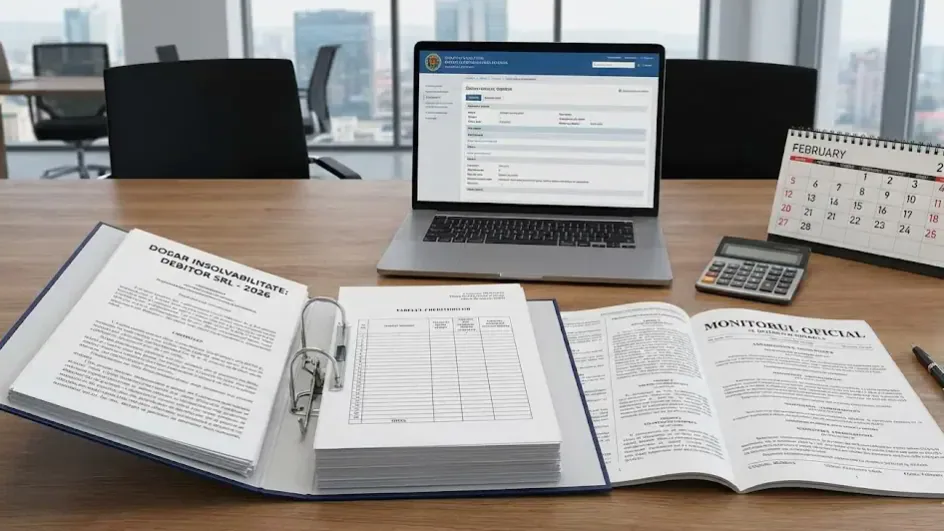
When non-payment becomes an insolvency issue
Delay may result from a temporary cash-flow gap, a dispute over performance or a genuine inability to service obligations. The first task is to distinguish them. Review how long payment has been overdue, the response to formal demands, new litigation, restructuring records, management changes and any sign that ordinary operations have stopped.
Law No. 149/2012 establishes a collective framework for satisfying claims from the debtor's estate through restructuring or bankruptcy. It is not a faster version of an ordinary civil claim. The court, insolvency administrator, creditors and debtor operate under a special regime, and both asset management and claim submission follow specific rules.
Do not publicly label a company bankrupt merely because one invoice remains unpaid. Until a court act exists, it is more accurate to describe arrears, financial distress or insolvency risk. Precision protects both legal position and business reputation.
What a creditor should prepare before filing
Collect the agreement, appendices, invoices, delivery and acceptance documents, correspondence, bank records and calculation. Separate principal, interest, penalties and secured amounts. Verify signatory authority and possible objections involving set-off, defects, amended maturity or partial payment.
Document recovery attempts and the debtor's replies, but avoid unlawful pressure, self-help seizure or publication of unverified allegations. Pledges, suretyships, guarantees and retention-of-title arrangements require separate analysis because each may alter the creditor's position.
Before substantial expenditure, compare three scenarios: ordinary recovery, a negotiated debt restructuring and participation in insolvency. The economically strongest route may be the one that preserves business value and a workable source of repayment.
Need to review the documents and risks before the next step?
A lawyer can assess the contracts, correspondence and facts, identify vulnerable points and recommend a practical plan for the business.
Opening proceedings and the risk of copied forms
An introductory application must meet the statutory conditions and be supported by evidence. The debtor's grounds and duties differ from the conditions for a creditor's application. The current text of the law, claim amount, preliminary steps and procedural jurisdiction must be checked at the filing date.
The court considers both the unpaid obligation and compliance with the special process. A form copied from another file may overlook security, a disputed debt, related parties or existing proceedings. An incorrect basis or incomplete exhibit set wastes time when estate value may already be declining.
The debtor should not wait for operations to stop completely. Management should preserve accounting records, avoid unreviewed preferences for affiliates and assess any duty to apply to the court in time.
Submitting a claim in an open case
After proceedings begin, a creditor must monitor court publications and statutory or court-ordered deadlines. A contract, or even an earlier judgment, does not always place the entire requested amount in the register automatically. The claim must follow the required form and include the calculation and supporting documents.
Legal nature, security, accrual date and ranking can affect voting and distribution. If the administrator or another participant challenges the claim, the creditor should respond within the applicable period and produce the relevant evidence.
Participation continues after validation. Review administrator reports, restructuring proposals, asset transactions and creditors' meeting decisions. A passive creditor often discovers decisive events too late.
Restructuring and bankruptcy follow different logic
Restructuring seeks to preserve a viable operation and make payments under a plan. A creditor should examine the realism of forecasts, sources of cash, performance controls and consequences of another default. A high promised percentage means little without a credible operating plan.
Bankruptcy focuses on realising assets and distributing proceeds under the law. Asset value, secured rights, procedural costs and ranking determine actual recovery. The nominal total of all claims is not the expected dividend.
For the debtor, proceedings are not merely a way to erase obligations. Management conduct, records and pre-filing transactions can receive separate legal scrutiny.
Practical plan for limiting loss
- Reconcile the amount and collect primary documents immediately.
- Confirm the debtor's status and whether a case is already open.
- Separate secured from unsecured claims.
- Compare ordinary litigation, settlement and insolvency scenarios.
- Monitor publications, court deadlines and administrator notices.
- Submit a complete calculation and supporting evidence.
- Assess restructuring through cash flow, not promises alone.
Legal assistance becomes urgent where assets are being transferred, related-party transactions appear, security is disputed, a deadline has been missed, several jurisdictions are involved or management liability is possible. The goal is to preserve the creditor's rights and choose the route with the strongest expected outcome.