
A practical Moldova guide: how to act if you are detained, arrested or questioned, what not to sign blindly, and when to involve a lawyer.
If you are detained or called for questioning: the first 5 steps
- Ask immediately what your procedural status is: witness, suspect, accused person, victim or someone invited to give explanations.
- Ask for the reason for the detention, summons or conversation, and ask to see the relevant document if one should exist.
- Before giving explanations on the substance, ask to contact a lawyer. This is not an admission of guilt; it is normal protection of your rights.
- Do not sign a record, explanation or statement if you have not read it, do not understand the language, see inaccuracies or notice blank spaces.
- If a relative has been detained, record the time, place, names of officials, authority involved and all calls, but do not try to solve the issue unofficially.
The most dangerous mistake in the first hours is the urge to explain everything quickly so that "there will be no problem". In reality, the first words, signatures and wording in official records often shape the later position in the case.
Lawful defence does not mean arguing, raising your voice or obstructing the investigation. It means understanding your status, knowing what is being asked, avoiding guesses and not signing text you do not control. A lawyer checks the grounds, documents, status, question risks and consequences of each explanation.
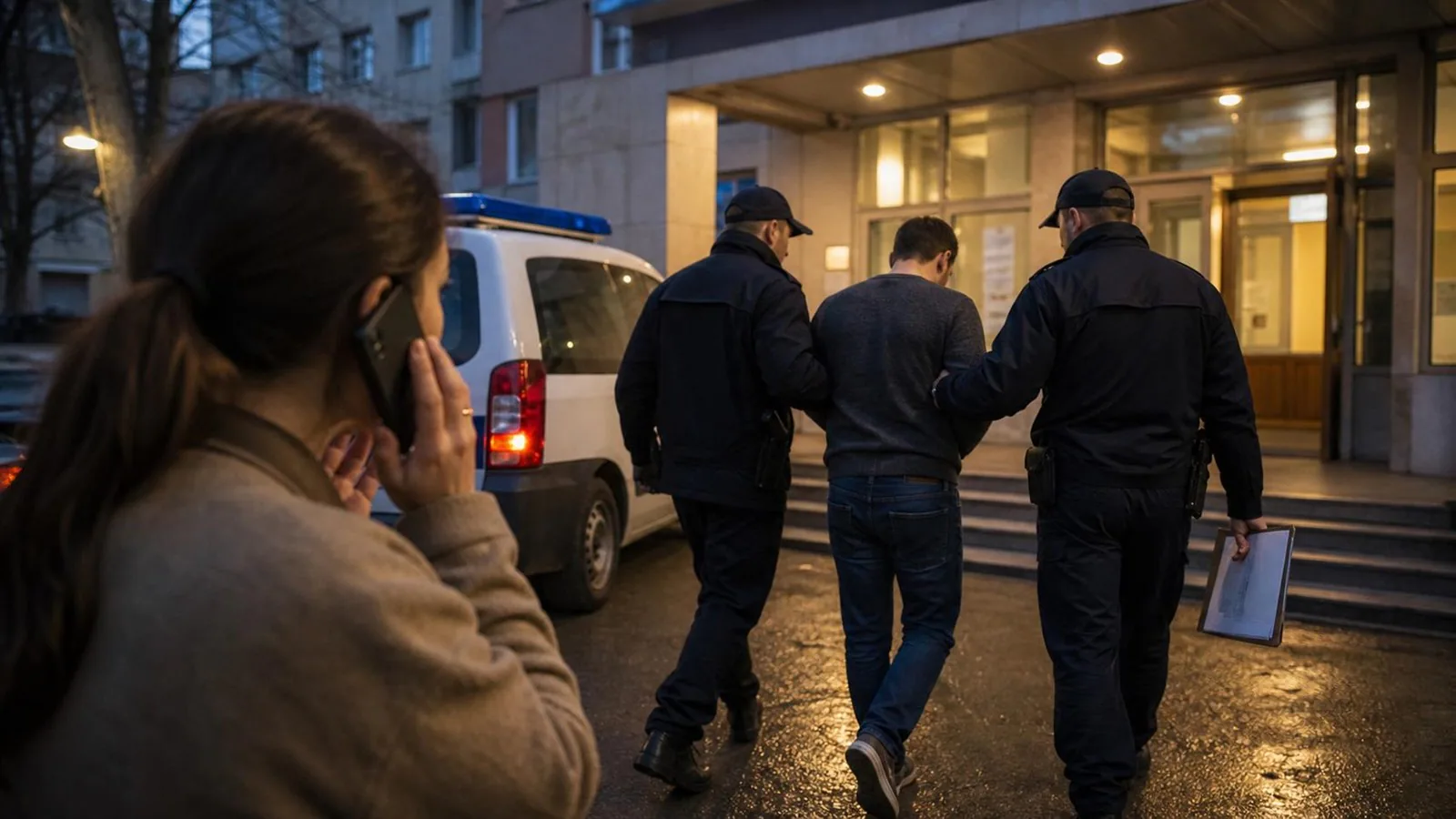
Detention, arrest and a summons are different situations
Detention, arrest and a summons for questioning should not be mixed together. Your status affects which documents must be prepared, which time limits matter, who makes decisions and what should not be done without legal advice.
Detention is an actual restriction of liberty, when the person can no longer leave freely. The Constitution of the Republic of Moldova states that detention and arrest are allowed only in cases and according to procedure established by law, and that detention may not exceed 72 hours. If a person is being kept in place but is told "just wait", the status and legal ground should be clarified.
Arrest is a stricter measure. Under the Constitution, arrest is carried out on the basis of a warrant issued by a judge, for up to 30 days, with extensions only by a judge or court according to law. So the phrase "he was arrested" is not always precise: sometimes a person was detained, sometimes brought in for a procedural action, and sometimes a court decision already exists.
A summons for questioning is a separate situation. A person may attend as a witness, victim or in another status. But if the questions concern your actions, money, correspondence, business, company documents or relatives, do not treat the meeting as an informal conversation.
What to say before a lawyer: less improvisation, more clarity
Before consulting a lawyer, it is safer not to give detailed explanations on the substance if you do not understand your status, the purpose of the question and the possible consequences of the answer. This is not advice to "never speak"; it is advice not to improvise when every word can matter.
Under stress, people often try to be helpful: they guess dates, explain other people's actions, repeat rumours or accept wording suggested by an officer. Later, phrases such as "I probably knew", "I think the money was for a service" or "yes, I will sign if needed" can be difficult to correct.
A safer approach is short and calm:
- clarify your status and the ground for the summons or detention;
- ask for a lawyer before explanations on the substance;
- do not answer complex questions from memory if you are not sure;
- do not comment on documents you have not seen in full;
- do not sign text that describes your words differently;
- ask to record if you were pressured, rushed or not allowed to read the document.
For company managers and employees, there is a separate risk: corporate documents and correspondence. Do not explain accounting, payments, contracts or colleagues' actions on the spot if you do not know what case the questions relate to. A lawyer helps separate the person's individual status from the company's position.
Detained or called for questioning?
We clarify your procedural status, documents and immediate risks. It is safer to contact a lawyer before explanations or signatures.
Signatures, records and explanations: where mistakes usually happen
A signature on a record should not be an automatic gesture to "finish faster". Before signing, read the whole document, check the facts and ask for remarks to be added if the text is incomplete, inaccurate or does not reflect your words.
Problems often start with details: the time is wrong, the request for a lawyer is not recorded, a phrase is shortened until it looks like an admission, the language issue is ignored, blank spaces remain, or the record says "no remarks" even though there were remarks.
Before signing, check:
- whether the date, time, place and participants are correct;
- whether the text matches what you actually said;
- whether your request for a lawyer or interpreter is recorded;
- whether there are blank spaces or annexes you have not seen;
- whether your remarks were included;
- whether you received a copy when the situation requires it.
If the document is in a language you do not understand well enough, say so clearly and ask for translation or clarification. Signing unclear text with the idea "we will sort it out later" creates a weak position.
If you are called as a witness, the risk does not disappear
A witness is not an accused person, but questioning is not automatically risk-free. Sometimes a person is first called as a witness to obtain explanations, documents, phone contacts or a version of events.
Be especially careful if the questions concern:
- your own actions, payments, messages or meetings;
- the actions of a spouse, relatives, business partners or employees;
- company documents, accounting, contracts or cash;
- your phone, messengers, cloud files and work chats;
- events where you may later become not only a witness, but also a suspect.
A witness's lawyer is not a theatrical move. The lawyer helps the person understand the question, avoid turning assumptions into facts and stay within what the person actually knows.
What relatives should do and when to call a lawyer
If a relative has been detained, the family's task is to gather verifiable information and arrange defence, not to rely on rumours, personal connections or emotional calls.
Write down:
- when the person stopped responding;
- where and by whom the person was detained or summoned;
- which police, prosecution or other authority is involved;
- who called, from what number and what was said;
- what documents, phone, car or items were seized;
- whether there was a search, bringing-in, questioning, medical complaint or request for a lawyer.
If the family cannot immediately hire a private lawyer, it should know about the state-guaranteed legal aid system. CNAJGS publishes information about territorial offices, forms and duty lawyer schedules. Still, in sensitive cases it is useful to obtain independent advice quickly, especially where there is a business element, a search, seizure of devices, several participants or a risk of arrest.
At Colenco Legal, we usually start with three questions: what has already been documented, what status the person has, and what procedural actions are expected next. This helps identify what must be checked urgently and which mistakes should be avoided in the next hours.
This article does not replace defence in a specific case. But remember one rule: do not turn the first hours into a personal experiment. Clarify your status, ask for a lawyer, read documents before signing and record everything that may matter.