
A practical Moldova guide: what to do after online fraud, when to contact the bank and police, what evidence to preserve, and why refunds are not automatic.
After online fraud, money is not always recoverable, but the first hours matter
- Stop the loss first: contact the bank, block the card or account, change passwords and cut off the fraudster's access.
- Act quickly: bank and police complaints should be filed immediately, even if the amount seems small.
- Recovery depends on the payment type: unauthorized operation, transfer confirmed under deception, or merchant dispute.
- Do not delete messages, links, receipts, numbers or screenshots: digital traces may become evidence.
In Moldova, online fraud is no longer limited to obvious prize messages. Fraudsters copy the style of banks and public institutions, send official-looking documents, call as alleged "bank security", ask people to take loans, transfer money to a "safe account" or invest through fake platforms. The National Bank of Moldova warns that no licensed bank, public institution or law enforcement authority will request codes, passwords, full card details or transfers to a safe account by phone or messaging apps.
The most expensive mistake is to keep negotiating with the fraudster instead of preserving evidence and starting official procedures. Even if the money has already left the account, fast action can affect further blocking, the bank's position and tracing of recipients.
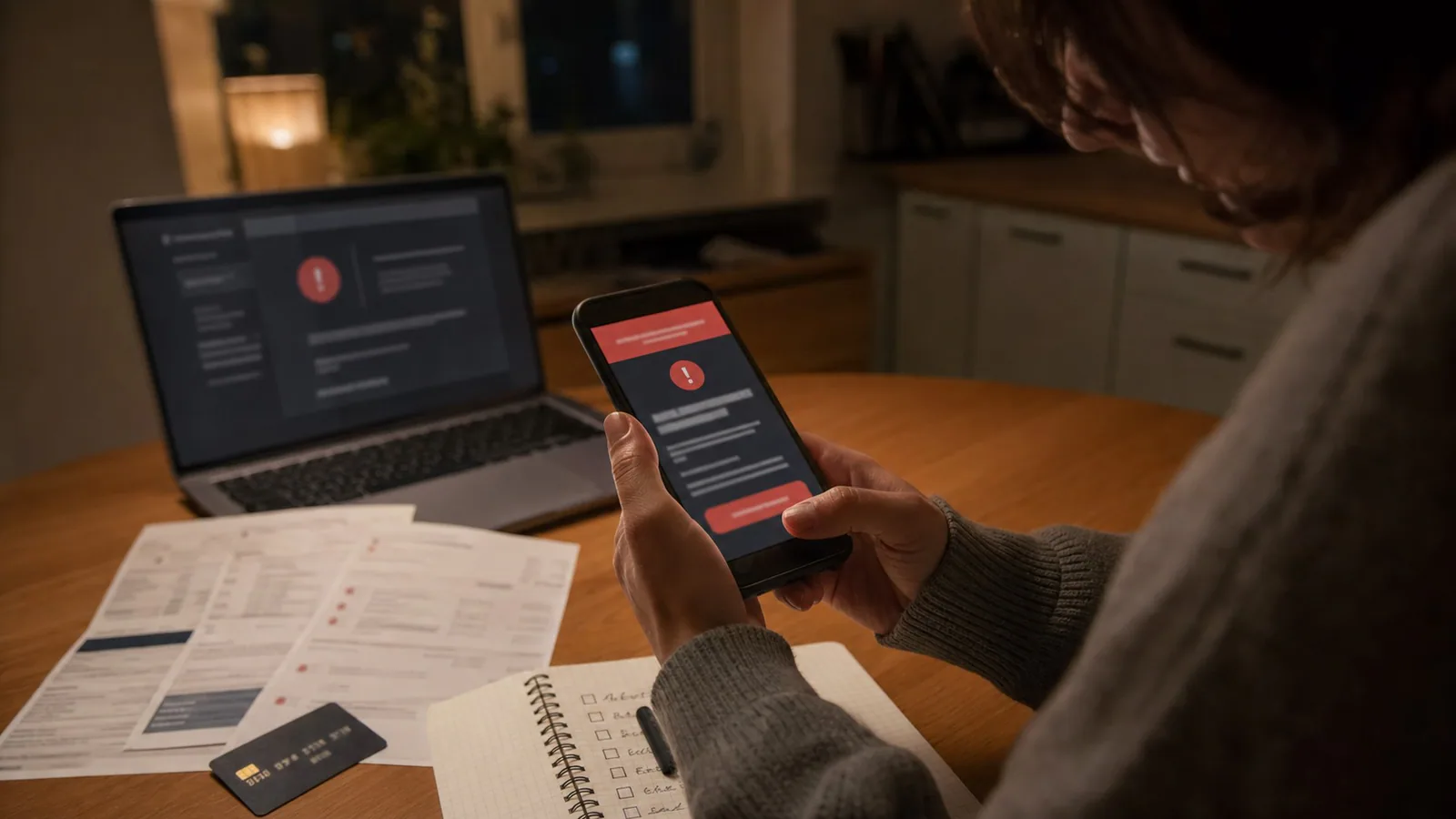
First steps: block access and preserve digital traces
If you realize that you have been defrauded, call the bank using the official number from its website or card, not the number from the suspicious message. Ask to block the card, banking app or specific operations where technically possible. If the fraudsters accessed your phone, email or banking app, change passwords from another device.
Preserve:
- screenshots of messages, profiles, links, ads and documents;
- phone numbers, Telegram/Viber/WhatsApp accounts, emails and domains;
- account statements, receipts, payment orders, IBAN or recipient details;
- call times, recordings if available, and names used by callers;
- information on which codes, documents or card data were disclosed.
If the pressure continues, end the conversation. For suspicious calls or messages, BNM recommends contacting the bank directly and, where necessary, calling 112.
Do not pay a "recovery fee", "release tax", "insurance deposit" or "unblocking fee". This is usually the second stage of the same scheme.
The type of payment determines the realistic recovery route
Before filing complaints, clarify what happened. An unauthorized operation is a payment you did not approve: card data used without you, stolen access, or an unknown debit appearing in the statement. For such cases, Law no. 114/2012 on payment services and electronic money provides a notification and correction mechanism. The bank will still review security of the card, passwords and personalized credentials.
A transfer confirmed by you under deception is harder. If you entered an OTP, confirmed a transfer in the app or sent money to an IBAN because someone claimed to be from the bank, the facts may amount to fraud, but the bank may treat the payment as client-authorized. This does not mean there is no remedy, but an automatic refund should not be assumed.
A merchant dispute is different again. If you paid by card for goods or services that were not delivered, a card dispute or chargeback may be available through the bank and card scheme rules. This is not the same as statutory refund of an unauthorized payment operation.
If fraudsters obtained documents or initiated loans, the issue is broader: you need to prevent further action and verify whether new obligations appeared in your name.
Lost money through online fraud?
We assess the payment, bank complaints, evidence and possible recovery routes. Early actions and deadlines may matter.
The bank complaint should be specific and registered
Submit a written request or use an official channel that generates a registration number. State the date, amount, currency, recipient, card or account, description of the scheme and specific requests: block the payment instrument, dispute the operation, conduct an internal review, provide a written reply and preserve technical data.
For unauthorized or incorrectly executed payment operations, Law no. 114/2012 requires notification to the payment service provider as soon as possible, generally no later than 13 months from the debit date. This is not a waiting period. The earlier the bank is notified, the stronger the practical position.
If the operation is truly unauthorized, the provider must refund the amount immediately or no later than the end of the next working day after establishing or being notified of the operation. There is a key caveat: if the provider has reasonable grounds to suspect fraud, it may notify competent authorities.
Avoid vague wording such as "it was my fault". Describe facts: who called, what was requested, what you did, when you saw the debit and when you informed the bank. These details matter when the bank assesses gross negligence and security duties.
Police and evidence: the complaint helps, but does not replace the bank route
A police complaint is important where the amount is significant, recipient data exists, fraudsters continue contact, or accounts, SIM cards, documents or fake platforms were used. Moldovan police reported in 2026 cases involving online investment platforms and people pretending to represent state institutions.
Attach:
- the bank complaint and registration number;
- statements and payment documents;
- screenshots and links;
- phone numbers, accounts, emails and websites;
- recipient payment details, if visible;
- a timeline of calls and instructions.
Police can investigate fraud, identify participants and seize devices, cards, SIM cards and documents. However, a criminal complaint does not guarantee a fast refund. The bank dispute and criminal complaint should usually run in parallel.
If the bank refuses, request a reasoned written answer. It will be needed for escalation, legal assessment or a possible court dispute.
A lawyer is useful when the amount is large, the bank refuses or loans may exist
Legal support is especially useful when the amount is significant, the bank replies formally, personal documents were used, loans were initiated, or funds left a company account. In these cases, wording of requests and preservation of evidence can change the strength of the case.
Prevention remains simple: never disclose OTP, CVV, PIN, passwords or full card details; do not transfer money to a "safe account"; verify any request through the bank's official number; avoid links about compensations, fines, loans or investments; set limits and use a separate card for online payments.