
Moldova needs a dedicated crypto-assets framework, but before the final vote the bill should be tested for proportionality, tax clarity and practical access to the legal market.
After the first reading: five conclusions for the market
- This is not yet a law in force. Parliament backed the bill at first reading on 24 July 2026; the text may change before final adoption and publication.
- Moldova needs a dedicated framework. The market would gain rules for issuers, service providers, disclosure, client protection, AML/CFT and market abuse.
- The bill already differentiates, but the calibration needs testing. It sets three minimum-capital tiers, yet the overall compliance burden may still be heavy for local startups and low-risk models.
- Tax and regulatory procedures must be clear before launch. Businesses need more than a statute: coordinated secondary rules, forms, tax treatment and a single interaction route.
- The second reading is a chance to improve the reform, not stop it. Amendments should make legal activity controlled, predictable and economically rational.
Moldova needs a legal framework, but the first reading does not finish the work
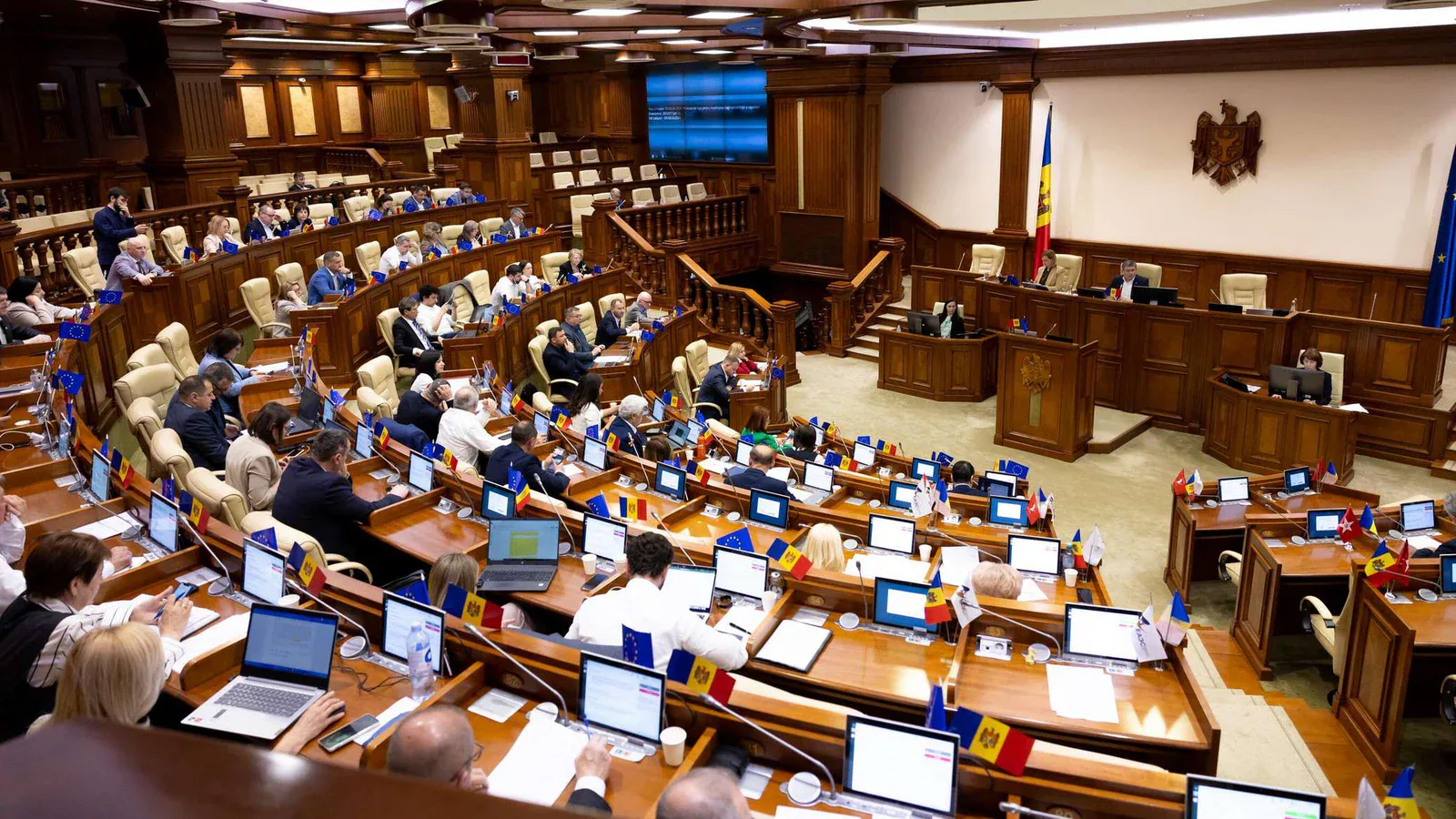
The Government approved the bill on 22 July 2026, and Parliament backed it at first reading on 24 July. This is a significant step, but not the final one: provisions may still be amended before the second reading, and the first vote alone does not create operative duties for the market.
A dedicated law is necessary. Moldova currently has no comprehensive framework for issuing crypto-assets and providing professional services around them, while Law No. 308/2017 has imposed strict restrictions on virtual-asset services since 1 July 2023. The bill proposes a move from a predominantly restrictive model to a regulated market: asset categories, crypto-asset white papers, authorisation of crypto-asset service providers — CASPs, client protection, supervision and liability for market abuse.
The bill’s architecture is based on EU Regulation 2023/1114, known as MiCA. The explanatory note describes it as a partial and adapted transposition for a non-EU state. It would therefore be inaccurate to say that the document was simply copied without changes. It would be equally inaccurate to assume that a reference to MiCA automatically resolves the question of regulatory quality.
MiCA itself calls for client protection and market integrity, but also proportionality, support for innovation and the avoidance of unnecessary administrative burdens. Testing the European model against Moldova’s economic scale, institutional capacity and business practice is not a departure from MiCA; it is part of sound adaptation.
The bill includes proportionality, but it must be tested against Moldova’s market
The bill does not place an independent adviser and a large trading platform in an entirely identical position. Its annex establishes three minimum own-funds categories:
- EUR 50,000 for the first category of services, including advice and portfolio management;
- EUR 125,000 for the second category, including custody and exchange;
- EUR 150,000 for the third category, which includes operating a trading platform.
When considering an application, the National Commission for Financial Markets (CNPF) must take account of the nature, scale and complexity of the activity. These are already elements of a risk-based approach and should be acknowledged when assessing the bill.
The issue, however, is not limited to capital. Authorisation also brings costs for corporate governance, internal control, IT security, reporting, AML procedures, staffing and ongoing compliance. The explanatory note itself recognises that this burden will affect startups and small businesses more strongly than banks or other already regulated entities with established infrastructure.
Before the second reading, lawmakers should therefore test not only the three capital thresholds but the full set of requirements for each business model. Non-custodial advice, a custodial wallet and a trading platform create different risks. Those differences should be reflected not only in capital, but also in fees, document volume, reporting frequency and mandatory internal functions.
The law should also clearly distinguish transactions involving a person’s own crypto-assets from professional services supplied to clients. The more precise the boundary, the lower the risk that an ordinary business transaction or the development of a technology solution is mistakenly treated as licensed intermediation.
An expensive entry route may keep activity outside Moldova’s licensed market
If legal entry is too costly, complex or uncertain, some participants may continue to use P2P transactions, cash, foreign platforms or structures outside Moldova. This is not a proven consequence of the bill; it is a regulatory risk that should be assessed in advance.
The answer is not weaker AML/CFT controls or reduced client protection. Those requirements are what give a regulated market value. The target should be procedural burdens that do not mitigate a specific risk: duplicate documents, repeated reporting, unclear fees and long waits between several authorities.
One possible tool is a regulatory sandbox: a limited environment in which a new financial product is tested under supervision and pre-agreed conditions. The Ministry of Economic Development and Digitalisation already proposed the idea during consultation. The authors did not include it in this bill but accepted that a separate framework for financial innovation and testing could be considered. That direction deserves further work: a sandbox should not replace authorisation, but it can help test a model before a full-scale launch.
The test of success is straightforward: for a good-faith participant, the legal model should be more practical and safer than the unregulated one, not merely available on paper.
Review your crypto model before the new regime starts
Colenco Legal can help classify your product or service, assess authorisation, AML and tax requirements, and prepare a practical compliance plan.
A tax map and clear institutional boundaries are needed before launch
The bill already distributes the main powers. The CNPF is expected to oversee a large part of crypto-asset offerings, asset-referenced tokens, CASPs and market abuse. The National Bank of Moldova (NBM) has the role concerning e-money tokens issued by banks and electronic-money institutions. The Office for Prevention and Fight against Money Laundering supplements the AML/CFT layer, while the State Tax Service addresses tax administration.
The issue is not a complete absence of powers, but how the institutional interfaces work. A market participant should know in advance where to file, which authority provides a binding interpretation, how information moves between institutions and whether the same data must be submitted more than once. During consultation, the Moldovan Bankers’ Association also sought clearer boundaries between the CNPF and NBM and warned against leaving essential issues solely to future secondary rules.
The bill does contain authorisation deadlines: up to 25 working days to check completeness and up to 40 working days for the decision once the application is complete, with one suspension of up to 20 working days. The improvement is not to promise a “missing deadline”, but to provide a clear end-to-end calendar, limit repeated information-request cycles and enable digital status tracking.
Tax requires separate work. The market bill does not create a comprehensive special regime for the full life cycle of a crypto-asset. Before launch, clear rules are needed at least on:
- when taxable income arises and how the tax base is calculated;
- whether exchanging one crypto-asset for another is a realisation event;
- the treatment of staking, mining and airdrops;
- documents proving acquisition cost and fees;
- differences between individuals and companies.
The explanatory note anticipates aligning the bill with the Tax Code and other legislation. For businesses, however, timing is critical: market authorisation should not start before the tax map, forms, guidance and transitional rules are available.
Seven changes for the second reading
Targeted amendments can preserve the bill’s European logic while making it workable in Moldova.
- Test proportionality for each risk model. Capital, fees, documents, reporting and mandatory internal functions should reflect whether the provider holds client assets, executes orders, operates a platform or only advises. A simplified route should not cover activities presenting a high risk to client funds.
- Create a separate path for controlled testing. If a regulatory sandbox cannot be properly integrated into this bill, it could be established through separate legislation or a general fintech framework. Participants need a limited period, client and transaction caps, exit rules and a clear allocation of liability.
- Clarify the boundary of a regulated service. The law should distinguish a professional service to a third party from own-account transactions, software development and purely technical infrastructure where the provider does not control client assets.
- Make authorisation predictable from filing to decision. The existing deadlines should be retained, but supplemented by a single digital window, a defined scope for information requests, transparent calculation of suspensions and protection against endless returns for revision.
- Prepare the tax map before the regime starts. Coordinated amendments or official guidance are needed for realisation, crypto-to-crypto, staking, mining, airdrops, expenses and documentation. They must cover companies and individuals and should not be replaced by a generic reference to the Tax Code.
- Synchronise supervision and secondary rules. The CNPF, NBM, AML authority and State Tax Service should publish a joint map of powers, forms, data requirements and information-exchange procedures in advance. Essential duties should not be disclosed for the first time after businesses have begun transitioning.
- Continue targeted consultation and measure the outcome. Public consultation has already taken place, including with business associations. Before the second reading, there should be a more practical dialogue with prospective CASPs, developers, startups, tax professionals and compliance specialists. An initial review after roughly 12 months of operation would be sensible, followed by a full proportionality and market-impact assessment within two years.
The legal market should be more practical than the shadow market
Moldova needs a crypto-assets market law, and the first reading brings the country closer to legal certainty. The reform’s quality will not be determined by resemblance to MiCA alone, but by whether a good-faith participant can identify the product’s status, entry cost, tax outcome and supervisory route before launch. If those four elements are clear and proportionate to risk, regulation can protect clients, support innovation and bring activity into a transparent legal framework.